Buying a Mobile Home
What to Look for During a Mobile Home Inspection in San Diego
What to Look for During a Mobile Home Inspection in San Diego A mobile home inspection can uncover structural, water, electrical, and mechanical problems before they become harder to address. Ask the inspector to check the piers and outriggers for loose connections, misalignment, or signs of settling, then examine the roof and siding for damage, […]
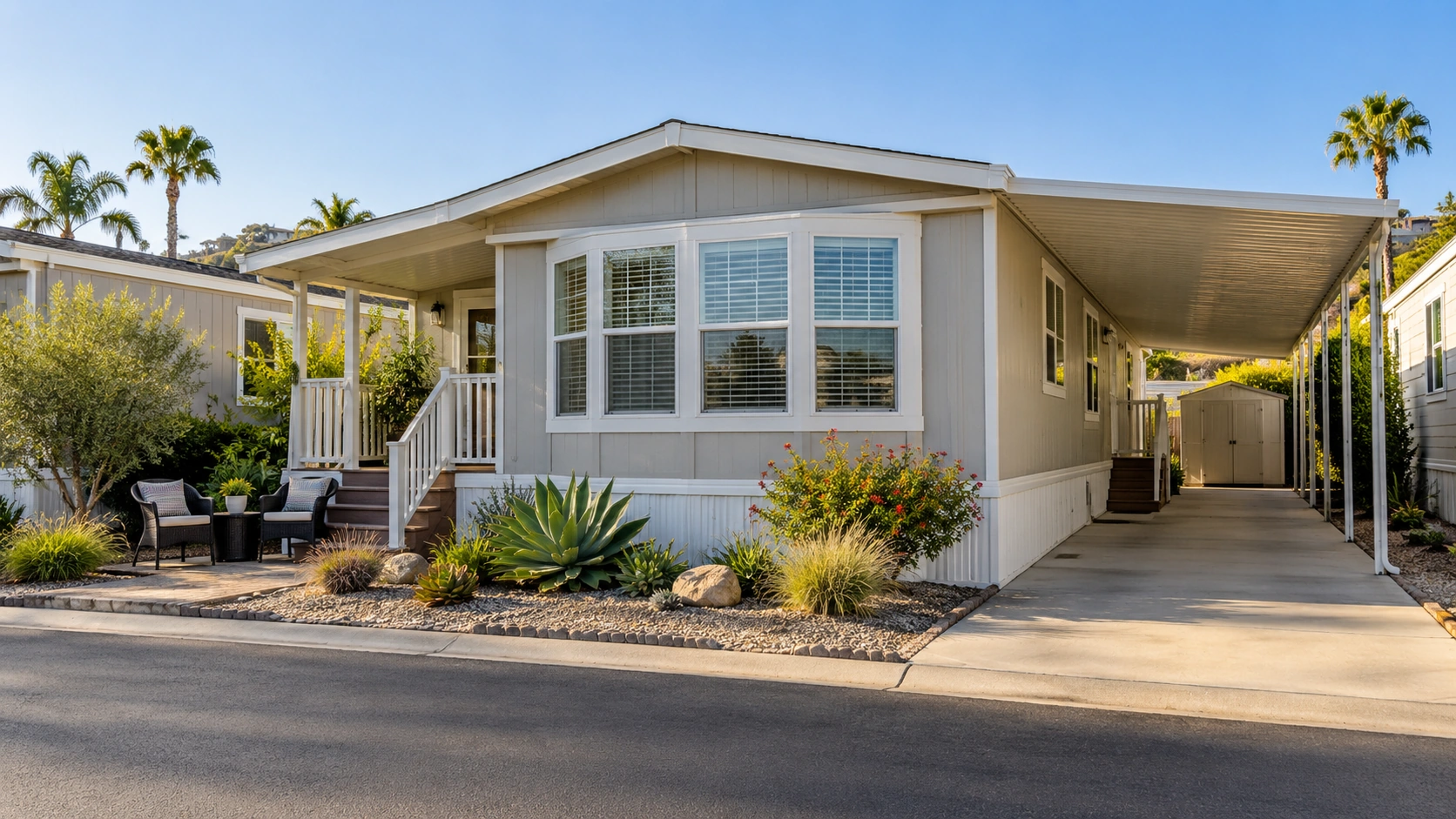
A mobile home inspection can uncover structural, water, electrical, and mechanical problems before they become harder to address. Ask the inspector to check the piers and outriggers for loose connections, misalignment, or signs of settling, then examine the roof and siding for damage, pests, and water entry.
Inside, look for water stains, soft flooring, and warped trim. Test plumbing fixtures, and have the inspector check outlets, wiring, and the electrical panel. They should also assess the heating and cooling systems, ducts, and safety devices. Use the inspection report to identify needed repairs and decide which issues require attention first.
Check Mobile Home Supports for Movement
Check the outriggers and foundation piers for loose connections, poor alignment, or signs of settling.
Movement can cause cracks in walls, uneven floors, or gaps along marriage lines, where sections of the home join.
Make sure the supports follow the manufacturer’s specifications and applicable local codes.
Ask your home inspector to check the piers and outriggers and document any concerns.
Address visible movement or loose connections promptly to help prevent further structural damage.
Inspect the Mobile Home Roof and Siding
Inspect the roof and siding for damage that could let water into your mobile home. Look for missing shingles, weather damage, pest activity, cracked or warped siding, and peeling paint.
These signs may point to leaks or moisture problems that need repair.
Check the roof’s age and condition to see whether it may need replacement.
Also make sure water drains away from the siding and foundation rather than pooling beside them.
Addressing damage and drainage problems early can help prevent leaks and further deterioration.
Spot Water Damage on Walls and Floors
Look for stains, discoloration, or peeling paint on walls and floors. These can signal a leak or moisture trapped behind the surface.
Soft or spongy flooring near sinks, toilets, or other plumbing may indicate water has reached the subfloor.
Check baseboards and trim for swelling or warping, and look at ceilings for stains or sagging, especially below bathrooms and kitchens.
These signs may point to hidden water damage in a mobile or manufactured home.
Ask a qualified home inspector to assess any areas of concern and identify the source.
Test Mobile Home Plumbing and Electrical
Test faucets, toilets, and other plumbing fixtures for leaks, clogs, and corrosion.
Check walls and ceilings for water stains, which can indicate hidden leaks. Run taps throughout the mobile home and note any drop in water pressure; blockages or leaks may be the cause.
In an older home, ask the inspector to assess the plumbing’s condition and note signs that further evaluation or replacement may be needed.
Test every outlet and switch, and look for exposed or damaged wiring.
Check the electrical panel for wear and outdated components.
Have a qualified electrician assess any safety concerns or repairs the inspector identifies.
Check Heating, Cooling, and Airflow
Have a qualified home inspector test the heating and cooling equipment, check its age and condition, and confirm it operates safely.
Older equipment may need repair or replacement, so ask the inspector to note any concerns.
Check the ducts for leaks or blockages that can reduce airflow and waste energy.
Replace dirty filters as needed, and test carbon monoxide detectors to confirm they work and are installed in appropriate locations.
These checks help keep your mobile home comfortable and support safe, efficient operation.
Use the Inspection Report to Plan Repairs
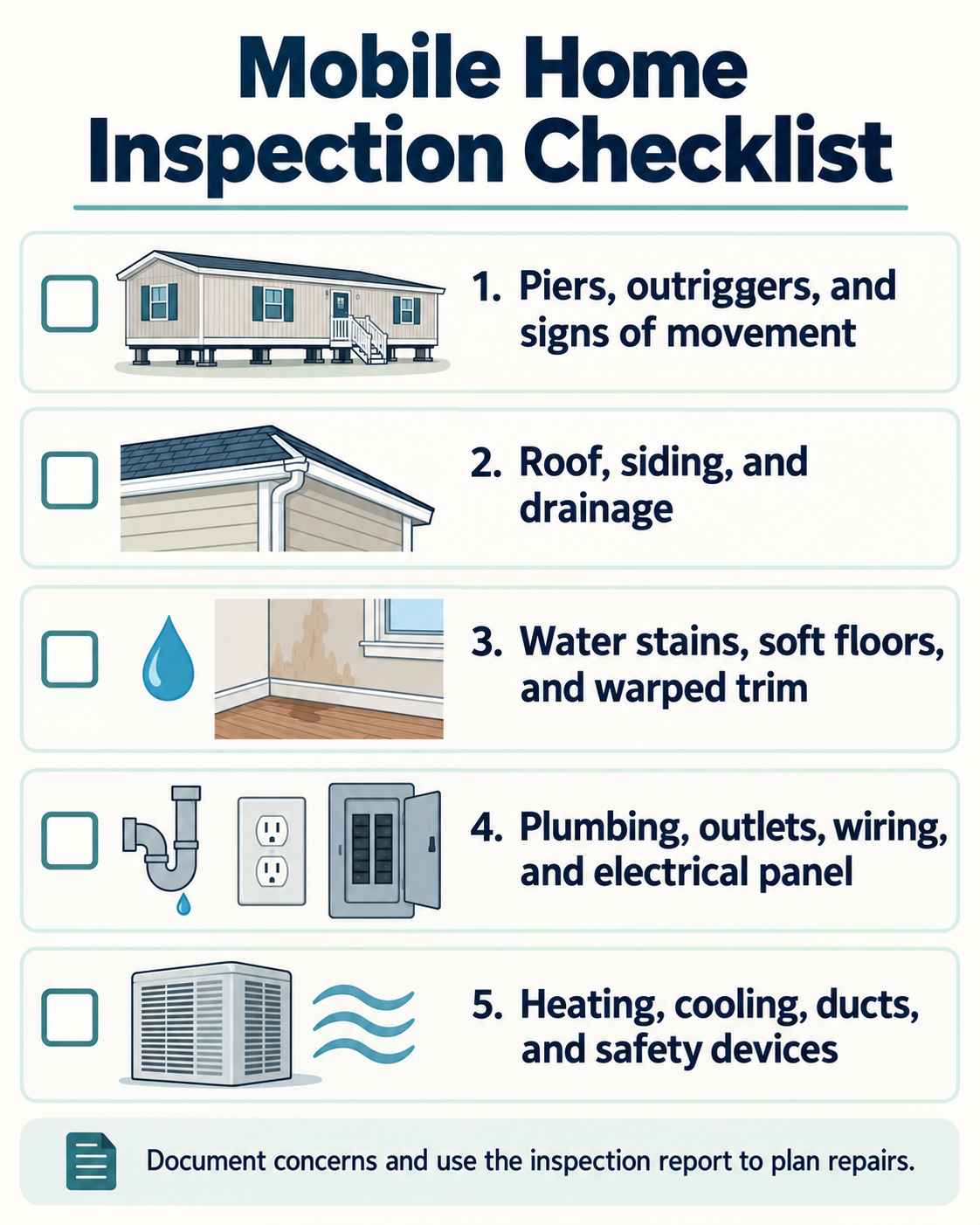
Use the inspection report to prioritize repairs, starting with safety hazards and urgent concerns such as active leaks, electrical problems, or structural movement.
Share the findings and photos with contractors so they can identify the work your mobile home needs. Use their estimates to set a repair budget and decide which upgrades can wait.
If you’re buying a home, use documented defects to discuss repairs, a price adjustment, or other terms with the seller, subject to your purchase agreement.
If the inspection findings change the repair budget you expect to carry after the purchase, use the SD Mobile Home Guide affordability calculator to see how those costs may fit your overall budget.
Keep the inspection report for future reference so you can track maintenance and recurring problems over time.
After repairs, schedule any recommended follow-up inspections to check that the work was completed properly.
Conclusion
Inspect the mobile home’s structure and major systems for movement, damage, leaks, and signs of malfunction. Check the supports, roof, siding, walls, and floors, then test the plumbing, electrical, heating, cooling, and ventilation systems.
Ask the inspector to explain each concern and include it in the report. Use the findings to identify needed repairs, get cost estimates, and discuss them with the seller before completing the purchase.