California Mobile Home Rules & Resources
What Should You Disclose When Selling a Mobile Home in California?
What Should You Disclose When Selling a Mobile Home in California? When selling a mobile home in California, start with the disclosures required for your transaction. For many resales covered by California Civil Code section 1102, the seller must provide the Manufactured Home and Mobilehome Transfer Disclosure Statement. Some transfers are exempt, so confirm which […]
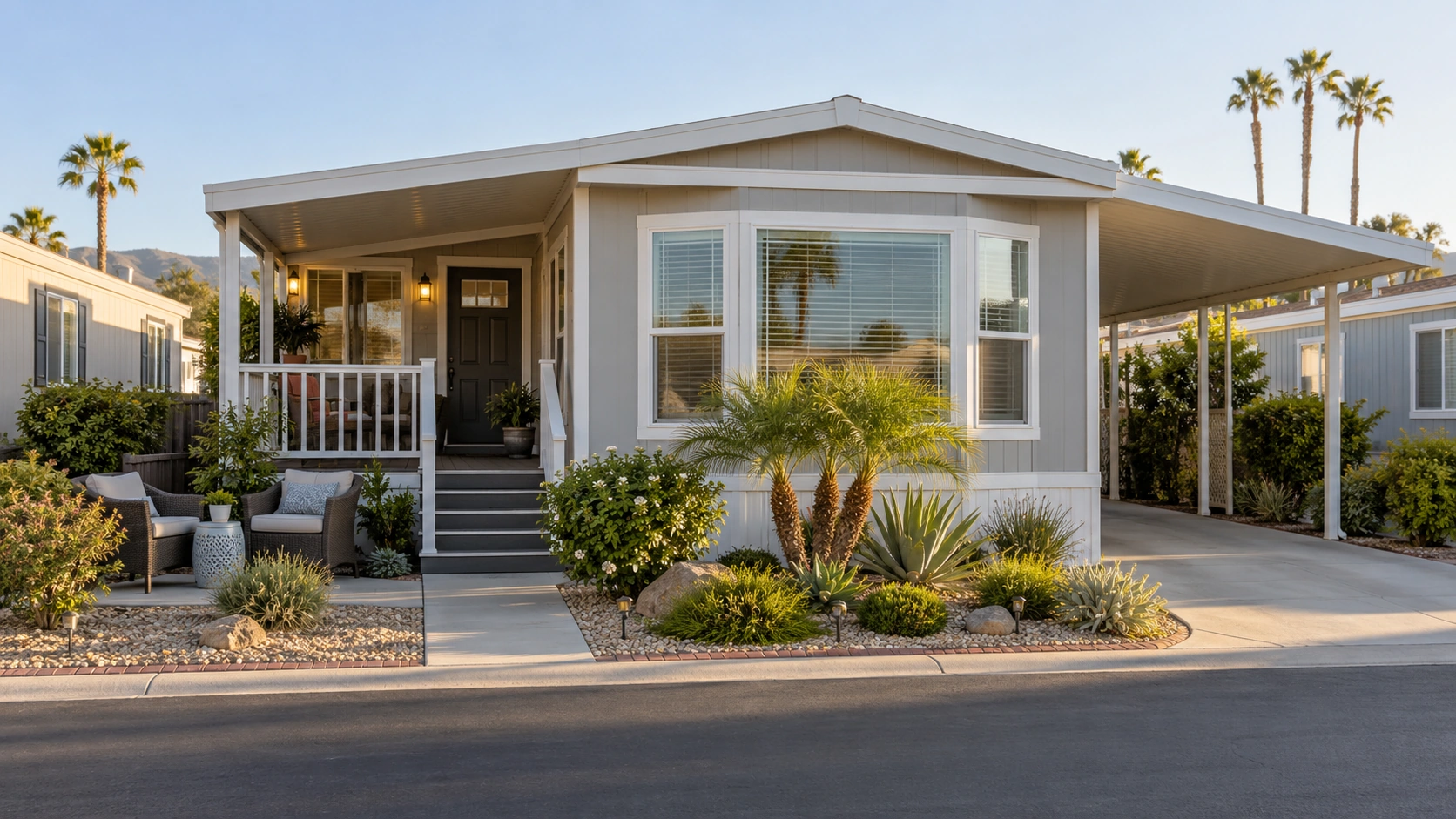
When selling a mobile home in California, start with the disclosures required for your transaction. For many resales covered by California Civil Code section 1102, the seller must provide the Manufactured Home and Mobilehome Transfer Disclosure Statement. Some transfers are exempt, so confirm which rules apply to your sale.
The state disclosure form asks about the home’s condition and known issues, including significant defects or malfunctions, environmental hazards, unpermitted or noncompliant alterations, settling or leveling problems, drainage, certain damage, citations, lawsuits, nuisances, and certain property-use or setback issues. Describe what you know accurately rather than guessing at causes.
If the home is in a park, the buyer may also need current park information and management approval to occupy the space. Transfer and titling requirements can differ depending on how the home is titled and whether it is on a permanent foundation. For help with your sale, visit the SD Mobile Home Guide.
Which California Mobile-Home Disclosure Rules Apply?
California Civil Code section 1102.6d provides a specific Manufactured Home and Mobilehome Transfer Disclosure Statement for resales that are subject to the state transfer-disclosure law. The law also contains exemptions for certain types of transfers, including some court-ordered, fiduciary, family, co-owner, foreclosure, and government transfers.
Use the required disclosure form when it applies, and complete it in good faith based on what you know. The form is a disclosure of the home’s condition, not a warranty and not a substitute for inspections a buyer may choose to obtain.
Also confirm how the home is titled. HCD’s Registration and Titling Program handles ownership records and title transfers for registered manufactured homes and mobilehomes. When a home is installed on a qualifying permanent foundation and its HCD registration has been canceled, the transfer process is different. Check HCD and applicable county records if you are unsure of the home’s current status.
What Defects and Repairs Should You Disclose?
On the state transfer disclosure statement, disclose significant defects or malfunctions you know about in areas such as the roof, walls, floors, windows, doors, electrical system, plumbing, porches, steps, railings, awnings, skirting, foundation or support system, and other structural components.
Also answer the form’s questions about whether included appliances, devices, or amenities are operating. If an item is not operating, describe the issue as accurately as you can.
Repair records can help explain the home’s history. Keep invoices, inspection reports, warranties, and other records that show what was repaired and when. If a problem returned after a repair, do not describe it as fully resolved unless you know that it was.
If you are unsure about the cause or extent of a condition, describe what you observed and avoid speculation.
What Changes or Permits Should You Disclose?
The California transfer disclosure statement asks whether the seller knows of room additions, structural modifications, alterations, or repairs made without necessary permits, as well as work that does not comply with applicable codes.
For work performed on the home, gather any permits, plans, inspection records, receipts, contractor information, and notices you have. Requirements can vary depending on the project and where the home is located.
If you know required permits were not obtained, or you have an unresolved citation or notice involving the home or accessory structures being sold with it, disclose that accurately. Do not describe work as permitted, inspected, or approved unless your records support that statement.
What Utility and Safety Issues Should You Report?
Report known problems that fall within the disclosure form’s condition questions, including significant defects or malfunctions involving the electrical system, plumbing, structural components, and listed appliances or equipment sold with the home.
The form also asks about certain environmental hazards and other conditions, including substances such as asbestos, formaldehyde, radon gas, lead-based paint, or chemical storage tanks when known to the seller. It also asks about settling or leveling problems, drainage or grading problems, and damage from fire, flood, earthquake, or landslides.
Describe known conditions and relevant repair history without guessing. A buyer can then decide whether to obtain inspections or professional advice before completing the purchase.
What Park Rules Affect a Mobile-Home Sale?
If the home will remain in a mobilehome park, park management may require prior approval of the prospective purchaser for tenancy. California law requires the selling homeowner or their agent to notify management of the sale before it closes when the home will remain in the park.
Park documents can affect the buyer’s decision and occupancy. Encourage the buyer to obtain the current rental agreement or lease, park rules and regulations, rent and fee information, and any residency application materials directly from management.
Do not promise that management will approve the buyer. Management’s approval process and required documentation are governed by current law and the park’s lawful written standards.
Which Sale Forms and Records Should You Provide?
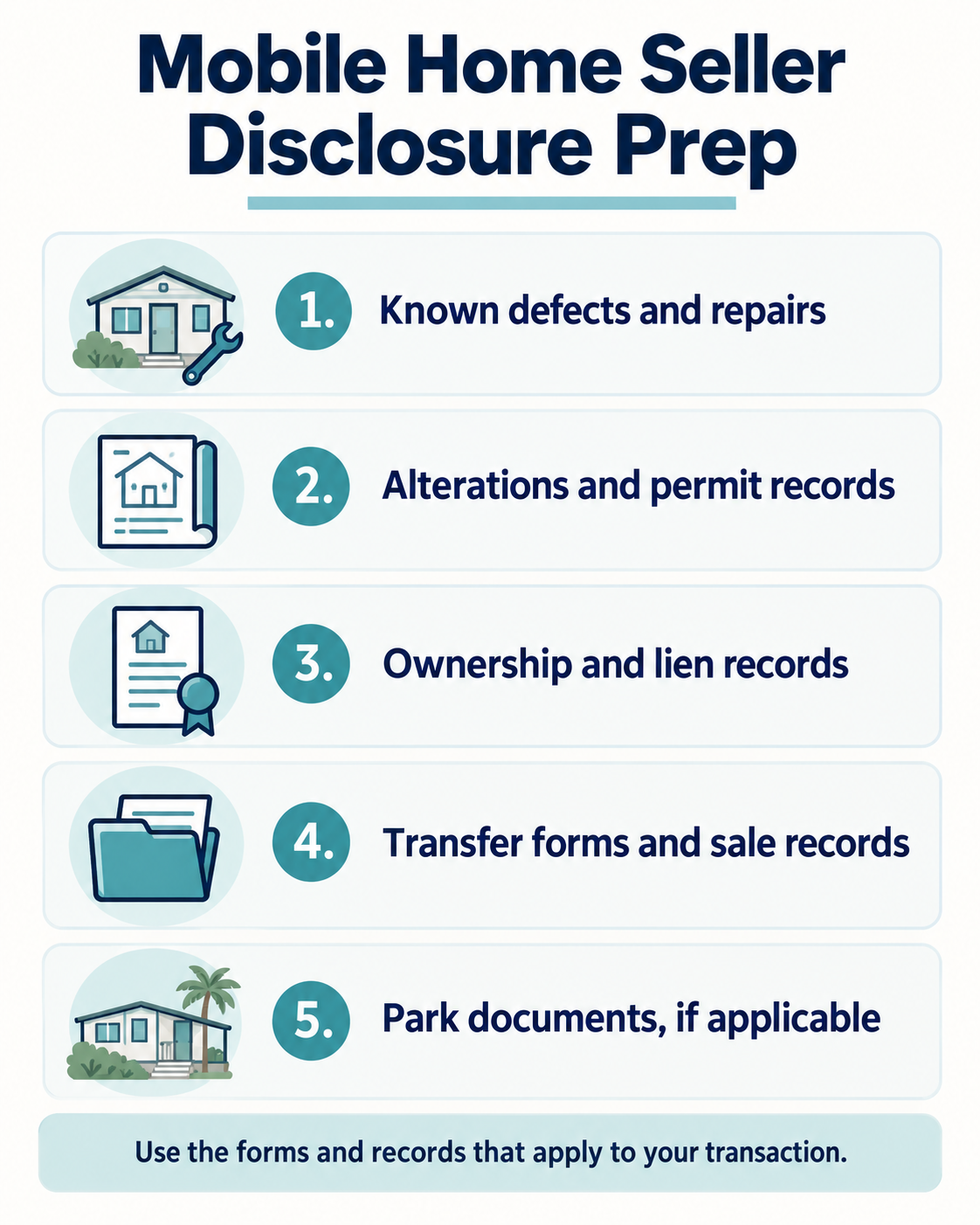
Gather the records that apply to your transaction. Depending on the home and sale, these may include:
- Transfer disclosure: The completed Manufactured Home and Mobilehome Transfer Disclosure Statement when the transaction is subject to that requirement.
- Ownership records: The current HCD certificate of title and registration card, or other ownership documents that apply to the home, together with any lien-release documents.
- Transfer forms: The forms required under HCD’s current private-sale instructions. The required packet varies based on the home’s title and tax status, and HCD has a separate process for some homes that still have an older DMV ownership certificate.
- Condition and alteration records: Available repair invoices, warranties, inspection reports, permits, plans, and notices relevant to the home and accessory structures.
- Sale and park records: The purchase agreement and, when applicable, current park or tenancy documents relevant to the buyer’s occupancy.
Do not assume that every sale uses the same documents. Check HCD’s current transfer instructions and obtain qualified legal or transaction advice if the home’s title, foundation status, liens, or transfer history is unclear.
Conclusion
When selling a mobile home in California, use the required transfer disclosure statement when it applies and answer it accurately based on your knowledge. Gather records for known defects, alterations, permits, repairs, ownership, and the transfer process, and make sure the buyer receives the documents required for the transaction.
If the home is in a park, coordinate early with management and direct the buyer to current park rules, rent information, and residency requirements. For help with your sale, visit the SD Mobile Home Guide.