Selling a Mobile Home
How to Set an Asking Price for a Mobile Home in San Diego
How to Set an Asking Price for a Mobile Home in San Diego Set your asking price by comparing your mobile home with recent sales in the same park or nearby communities. Look for homes with similar size, age, and condition. If one sold for more but had a newer roof or updated plumbing, account […]
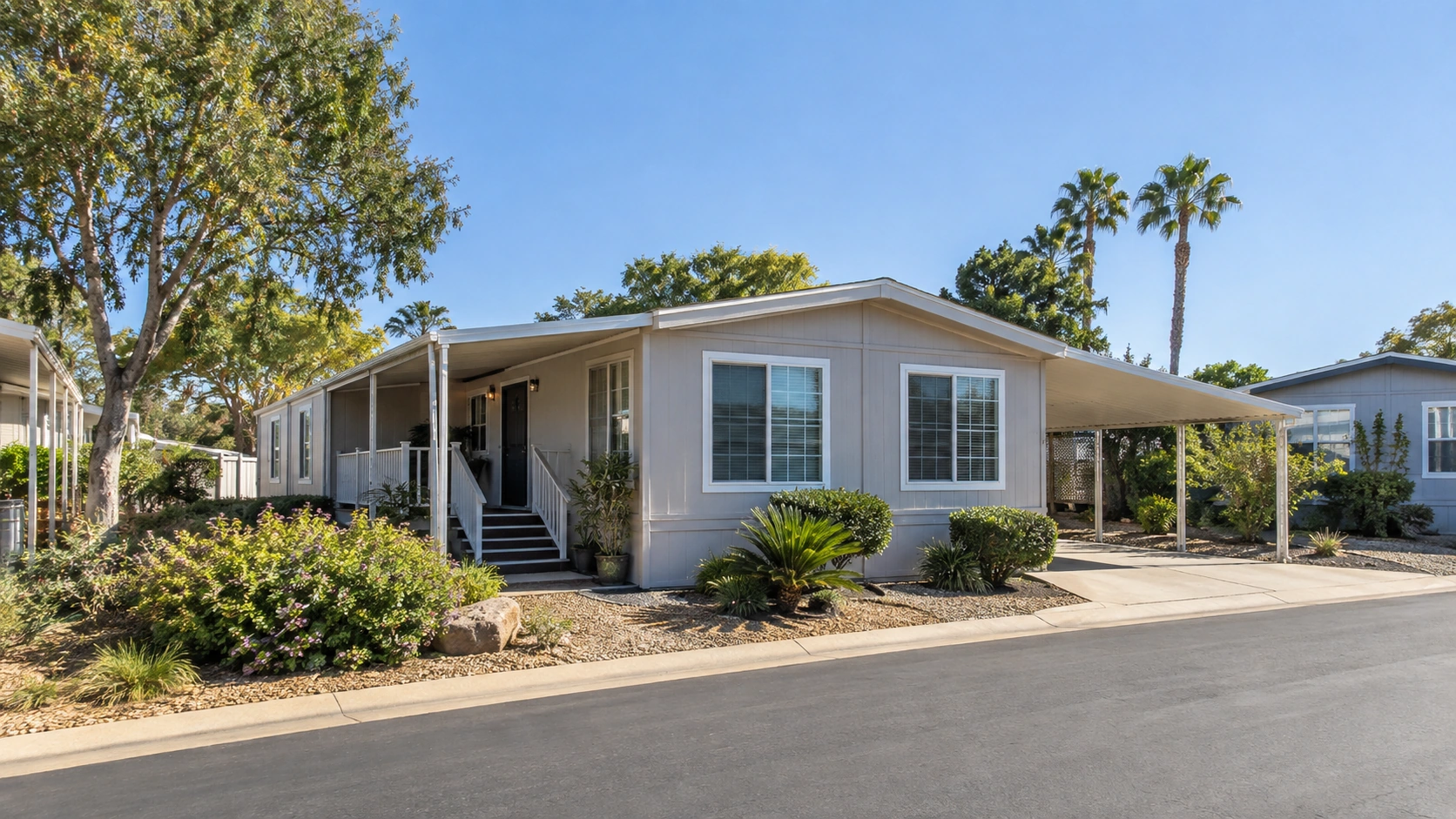
Set your asking price by comparing your mobile home with recent sales in the same park or nearby communities. Look for homes with similar size, age, and condition. If one sold for more but had a newer roof or updated plumbing, account for those differences rather than treating the sale price as a direct match.
Inspect your home’s roof, plumbing, and electrical systems, and list needed repairs alongside visible upgrades. Estimate repair costs so you can decide whether to complete the work before listing or reflect it in the asking price.
Compare monthly park fees, lease terms, location, and amenities with those of similar homes. These factors can change what buyers are willing to pay, even when two homes have similar features. If you find few comparable sales, ask a local agent or appraiser to help assess the price.
After listing, track buyer questions and offers. If buyers repeatedly point to the same repair or cost, consider whether your price or listing details need adjustment.
How Do You Price a Mobile Home in San Diego?
Start with recent sales of similar mobile homes in nearby San Diego communities. Compare homes with similar condition and location to estimate a reasonable asking price; asking prices alone don’t show what buyers have paid.
Next, inspect the home’s roof, plumbing, and electrical systems. List needed repairs and account for their likely cost when setting your price. For example, a buyer may offer less for a home that needs a roof repair than for a comparable home in move-in condition.
Also compare the home’s location within the park, community features, park fees, and lease terms. A desirable spot may draw more interest, while higher monthly fees or less favorable lease terms may lead buyers to offer less.
A professional appraisal can provide another estimate based on the home and available sales data. Additionally, you can unlock your home’s worth with our free estimator tool to gain insights into its market value.
Which San Diego Mobile Homes Make Good Comparables?
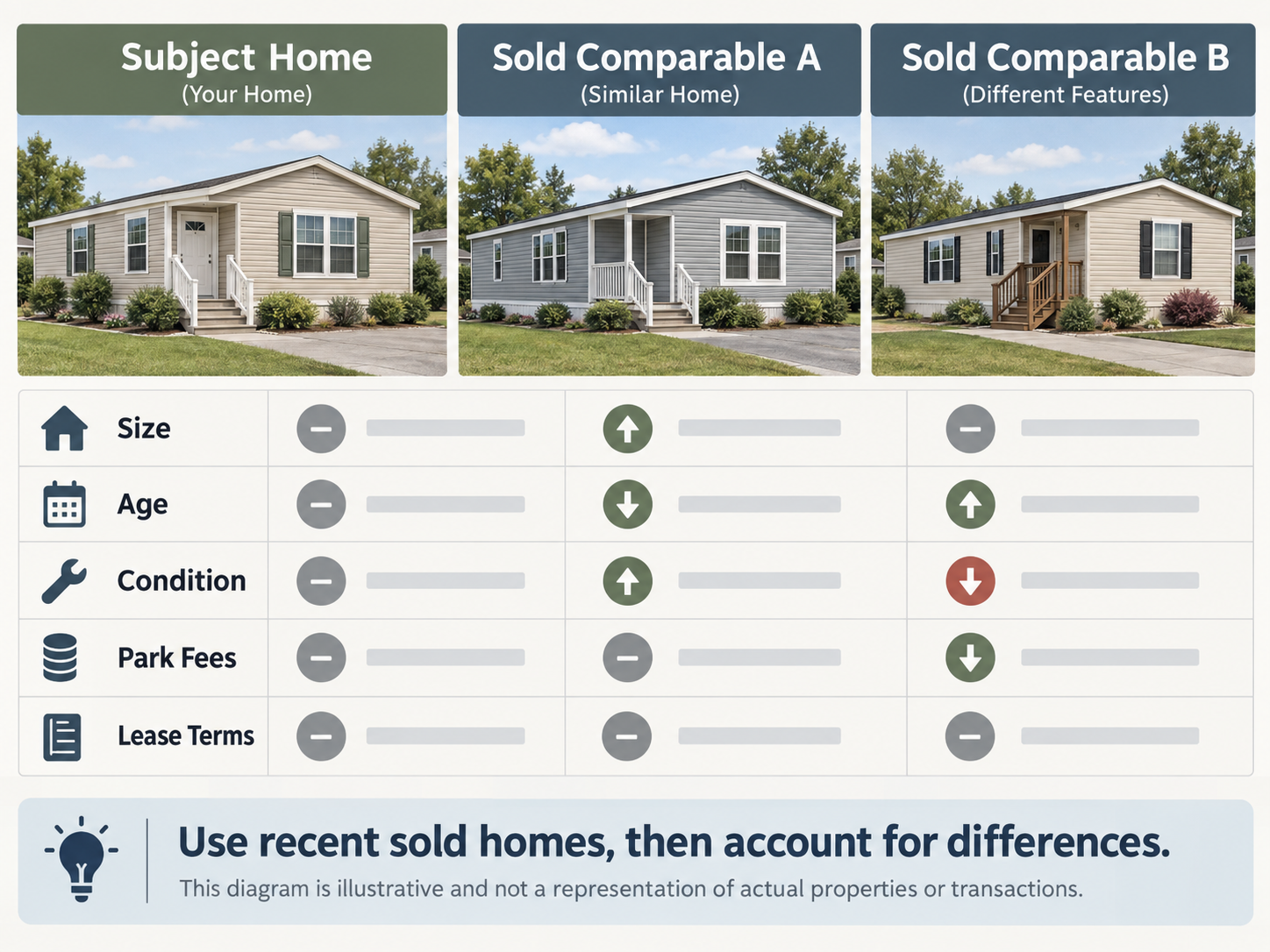
Use recent sales of mobile homes in the same neighborhood or community as yours. Nearby homes are more likely to share local conditions that influence sale prices, making them more useful comparisons than homes elsewhere in San Diego.
Match each sale to your home by size, age, and condition. For example, compare homes within the supplied range of 700 to 1,500 square feet, then note whether one has been updated or needs repairs.
Check sales from the past six months so your comparisons reflect recent market activity.
Compare community features and rules as well. A shared pool or clubhouse may distinguish one community from another, while rules may affect which buyers can purchase there.
Record these differences alongside each sale to see which homes are the closest matches.
How Do Condition and Upgrades Affect Price?
A home’s condition and upgrades affect its asking price, but buyers may not pay extra for every improvement. Before choosing a price, inspect the structure, plumbing, electrical systems, and roof. Then compare the home with similar manufactured homes of a similar age and condition.
Focus on upgrades buyers can see and use, such as modern appliances, efficient windows, or a renovated bathroom. These improvements may support an asking price 10% to 15% higher, but they don’t guarantee a higher sale price. A sound roof and recent repairs can also reassure buyers; keep records of the work to show what’s been done.
Age matters because homes built in the 1970s and 1980s may need updates to meet current buyer expectations. List any needed repairs alongside completed improvements, then set the price to reflect the home’s actual condition.
Count upgrades only when they’re likely to matter to buyers.
How Do Park Fees and Lease Terms Affect Price?
Park fees and lease terms can shape your asking price because buyers weigh the monthly cost and the rules attached to the home. In San Diego, park fees often range from $500 to $1,200 a month. A higher fee leaves buyers less room in their budgets for the purchase price, so compare your fee with what it covers before setting your price.
Lease terms can also affect how many buyers consider the home. A longer lease or permission to sublet may suit buyers who want more flexibility; restrictions may narrow the pool. Before listing, check the lease for its term, renewal conditions, subletting rules, and any other limits buyers would need to follow.
Tell buyers what the park fee pays for, such as maintenance or community amenities. This helps them judge whether the fee is worthwhile and compare the total monthly cost with other homes.
Favorable fees and lease terms may support a higher asking price, but they don’t guarantee a particular resale price.
When Should You Get a Local Appraisal or Agent’s Advice?
A local appraisal or agent’s advice can help you price a San Diego mobile home when comparable sales are scarce or your home has features that make comparisons difficult.
Ask for guidance if recent sales don’t reflect your home’s location, condition, or community.
An appraiser can compare recent sales and assess how your home’s condition and location differ from those properties.
An agent familiar with mobile homes can explain current buyer demand and how park amenities, fees, and reputation may shape what buyers are willing to pay.
Before setting an asking price, ask a local specialist to review comparable sales and identify repairs or upgrades that buyers may consider.
Share details about your home and park so the advice reflects the factors that distinguish your property.
How Should You Set and Adjust Your Asking Price?
Compare recent sales of mobile homes similar to yours in size, age, and condition to set a realistic starting price. Use those sales as a guide, then adjust for differences between the homes rather than relying on asking prices alone.
Price your home’s upgrades based on their condition and usefulness. Modern appliances or recent renovations may support a higher price than similar homes without them, but they don’t guarantee buyers will pay the full cost of the work.
Check current demand before setting your price. If interest in San Diego mobile homes is rising, you may have more room to ask a higher price; if buyer interest is weaker, a more competitive price may attract more showings.
Include your park’s amenities and fees in your comparison. Buyers may weigh those fees against features the park offers, so compare your home with others in parks that have similar costs and amenities.
After listing, track showing feedback and how long the home stays on the market. If few buyers request showings or feedback points to price, compare your asking price with recent sales again and consider a reduction.
Conclusion
Set your asking price by reviewing recent sales of similar mobile homes in San Diego. Compare homes with similar size and condition, then account for differences such as repairs, upgrades, park fees, and lease terms. Park fees and lease terms can change a buyer’s monthly costs, so compare them alongside the sale prices.
Online estimates may miss those details. If comparable sales are hard to interpret, ask a local agent or appraiser to review them. Once listed, track showings and offers: if buyers show little interest or offers come in below your asking price, reassess the price and adjust it promptly.