Buying a Mobile Home
How to Evaluate an Older Mobile Home Before Buying in San Diego
How to Evaluate an Older Mobile Home Before Buying in San Diego Before buying an older mobile home in San Diego, confirm the home’s identity, inspect its condition, and understand the costs and rules that apply to its space. Check the year built and available identifying information, and ask about additions or exterior changes that […]
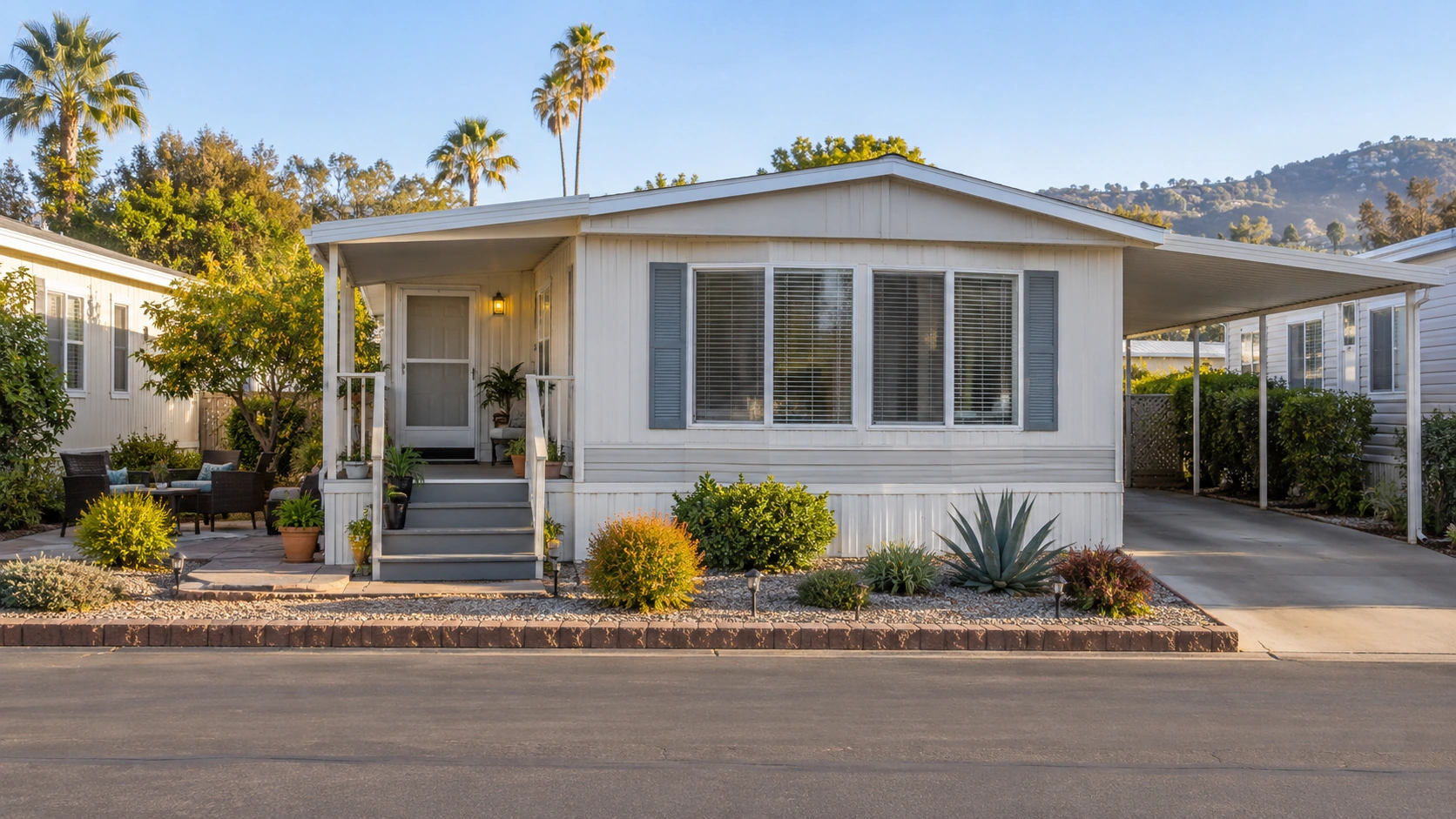
Before buying an older mobile home in San Diego, confirm the home’s identity, inspect its condition, and understand the costs and rules that apply to its space. Check the year built and available identifying information, and ask about additions or exterior changes that may have required approval. For a manufactured home, make sure the available records correspond to the home.
Inspect the roof, support system, crawl space, floors, windows, plumbing, wiring, and heating system. Look for leaks, structural movement, and safety problems. In an older home, ask the inspector whether testing for mold, lead-based paint, asbestos-containing materials, or other hazards is appropriate based on the home’s age, materials, and condition.
If the home is in a park, get the current space rent, utility arrangements, written rules, and residency requirements directly from park management. In many transactions, the buyer receives this park-specific information after there is a fully accepted offer. A qualified inspector can identify problems you might miss and provide findings to discuss with the seller before you complete the purchase.
Confirm the Older Mobile Home’s Age and Code Status
Check the home’s year and identifying information using the records that apply to the home. Homes built before the federal manufactured-home construction standards took effect in 1976 were built under earlier standards.
Age can affect condition, repair needs, available parts, and the type of inspection or follow-up evaluation that may be appropriate.
If the home has additions, exterior changes, or other noticeable alterations, ask what work was done and whether any required park or agency approvals applied. Avoid assuming that every alteration follows the same approval or permit process.
Have a qualified inspector examine the home’s support system and visible structural components and document any concerns.
Spot Structural Damage and Water Intrusion
Inspect a mobile home for structural damage and water intrusion, since both can lead to significant repair needs.
Look for cracks, uneven floors, or shifted sections that may signal movement or settling. Check the crawl space for water stains, damp areas, or mold, which can point to leaks or drainage problems.
Examine window seals and weatherstripping for gaps or deterioration that could let in moisture. Look for rust on metal components and check the roof for damaged materials, sagging, or other signs of wear.
If you find signs of damage or leaks, have a qualified inspector assess the cause and needed repairs.
Inspect the Roof, Support System, and Crawl Space
Inspect the roof, support system, and crawl space for damage that could affect the home’s stability, comfort, or weather protection.
On the roof, look for damaged or deteriorated materials that could let water in. Ask the inspector to check the piers, supports, and visible structural connections for movement, deterioration, or other concerns.
In the crawl space, check for moisture, mold, pest activity, damaged materials, and signs of plumbing leaks.
Poor ventilation or ongoing moisture can contribute to deterioration, while pests can damage building materials.
Also note the condition of insulation and weatherproofing where visible.
Check Plumbing, Wiring, and Heating Systems
Check the plumbing, wiring, and heating systems for wear, damage, and safety concerns.
Ask a qualified inspector to check for leaks, corrosion, drainage problems, and other visible plumbing issues. If the inspector identifies a concern that requires further evaluation, follow up with the appropriate specialist.
Have electrical concerns evaluated by a qualified electrician when needed, especially if the inspector finds damaged wiring, questionable connections, or an older electrical panel.
Test the heating system, and ask about its age, condition, and operation.
Review any available maintenance information and plan for repairs or replacement if equipment is worn or unreliable.
Consider Age-Related Materials and Moisture Concerns
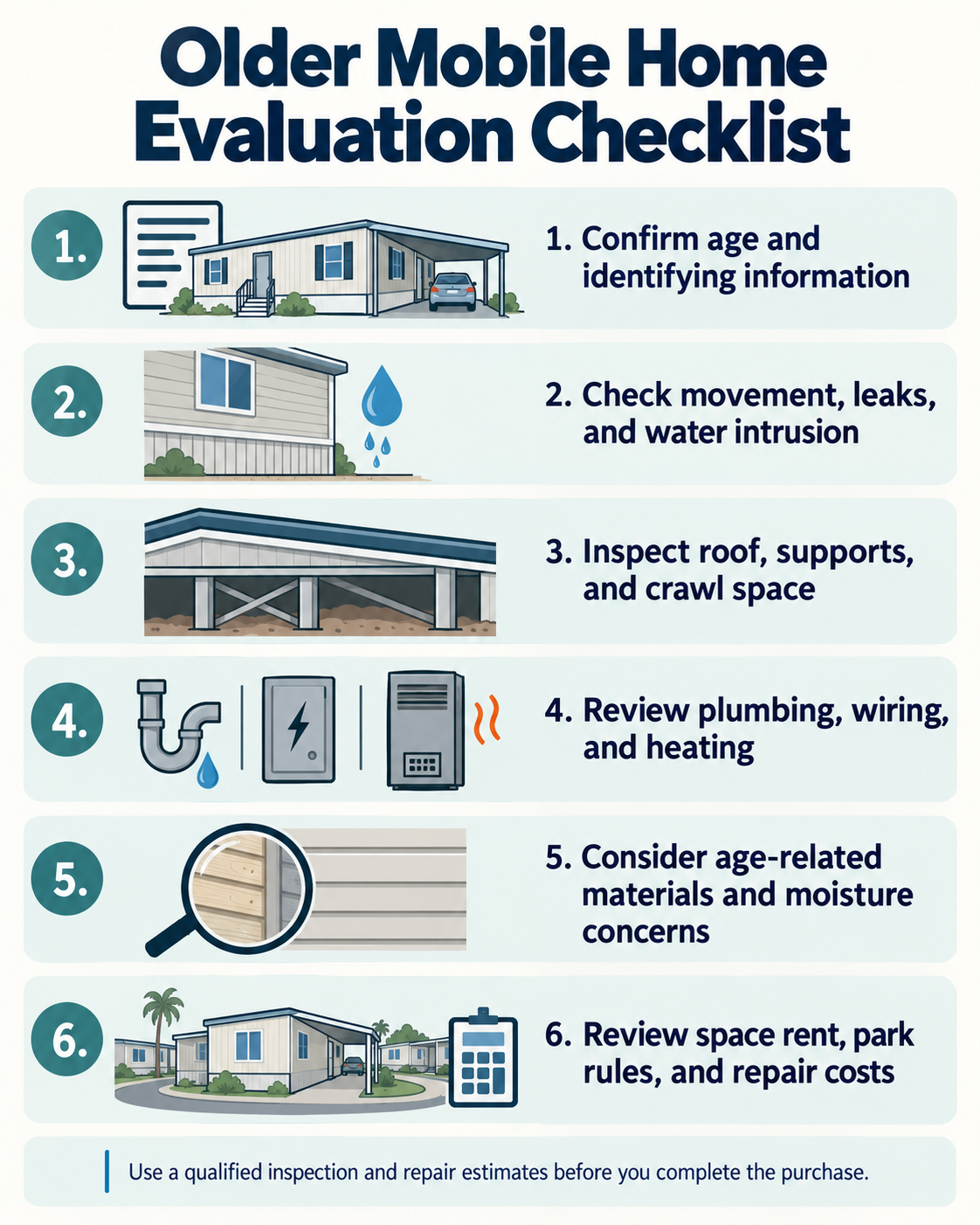
In an older mobile home, look for moisture problems and ask the inspector whether the home’s age, materials, or condition suggest that specialized testing is appropriate.
Homes built before 1978 may warrant additional attention to lead-based paint, while some older building materials may contain asbestos. These possibilities do not mean every older home has a hazard that requires testing.
Check damp areas for discoloration, staining, soft materials, or musty odors that may indicate an ongoing moisture problem.
Do not disturb suspect materials simply to determine what they contain. If testing or further evaluation is appropriate, use a qualified professional.
Ask the seller about any inspection or remediation records they have, but do not assume complete records will exist for every older home.
Review Park Rules, Space Rent, and Ownership Costs
If the home is in a park, get the current written rules, space rent, utility information, and residency requirements directly from the park manager. In many transactions, this park-specific information is provided after you have a fully accepted offer.
Review the rules that apply to residents, including any pet, age, guest, or exterior-change requirements that are relevant to your household and plans.
Confirm the current space rent, recurring park charges, and what the rent includes.
Then estimate your monthly costs for utilities, insurance, maintenance, and anticipated repairs. If inspection findings change your expected repair budget, use the SD Mobile Home Guide affordability calculator as an educational budgeting tool to see how the overall costs may fit your budget.
Hire an Inspector and Use Findings Before Closing
Arrange a qualified inspection during the transaction and before completing the purchase. Ask the inspector to examine the support system, roof, plumbing, electrical system, and other accessible components and to document signs of water damage, pests, or structural movement.
Read the report and ask which repairs are urgent and what maintenance may be needed later.
Use documented findings to discuss repairs, a price adjustment, or other terms with the seller, subject to your purchase agreement.
The report can also help you estimate repair costs and decide whether the home still fits your budget.
Conclusion
Before buying an older mobile home in San Diego, inspect its condition, ask about additions or exterior changes, and review the current park information that applies to the home and space. Have a qualified inspector look for water damage, structural movement, electrical or plumbing concerns, and materials that may need specialized evaluation.
Use the inspection findings and repair estimates to understand the home’s condition and discuss any repair or price issues with the seller under your purchase agreement before completing the purchase.