California Mobile Home Rules & Resources
How Manufactured Home Title and Registration Work in California
How Manufactured Home Title and Registration Work in California For most California manufactured homes that remain in HCD’s registration system, the current title and registration are the main starting documents for a sale or transfer. They show the home’s registered ownership information and help the mobile home sales agent determine which transfer instructions apply. If […]
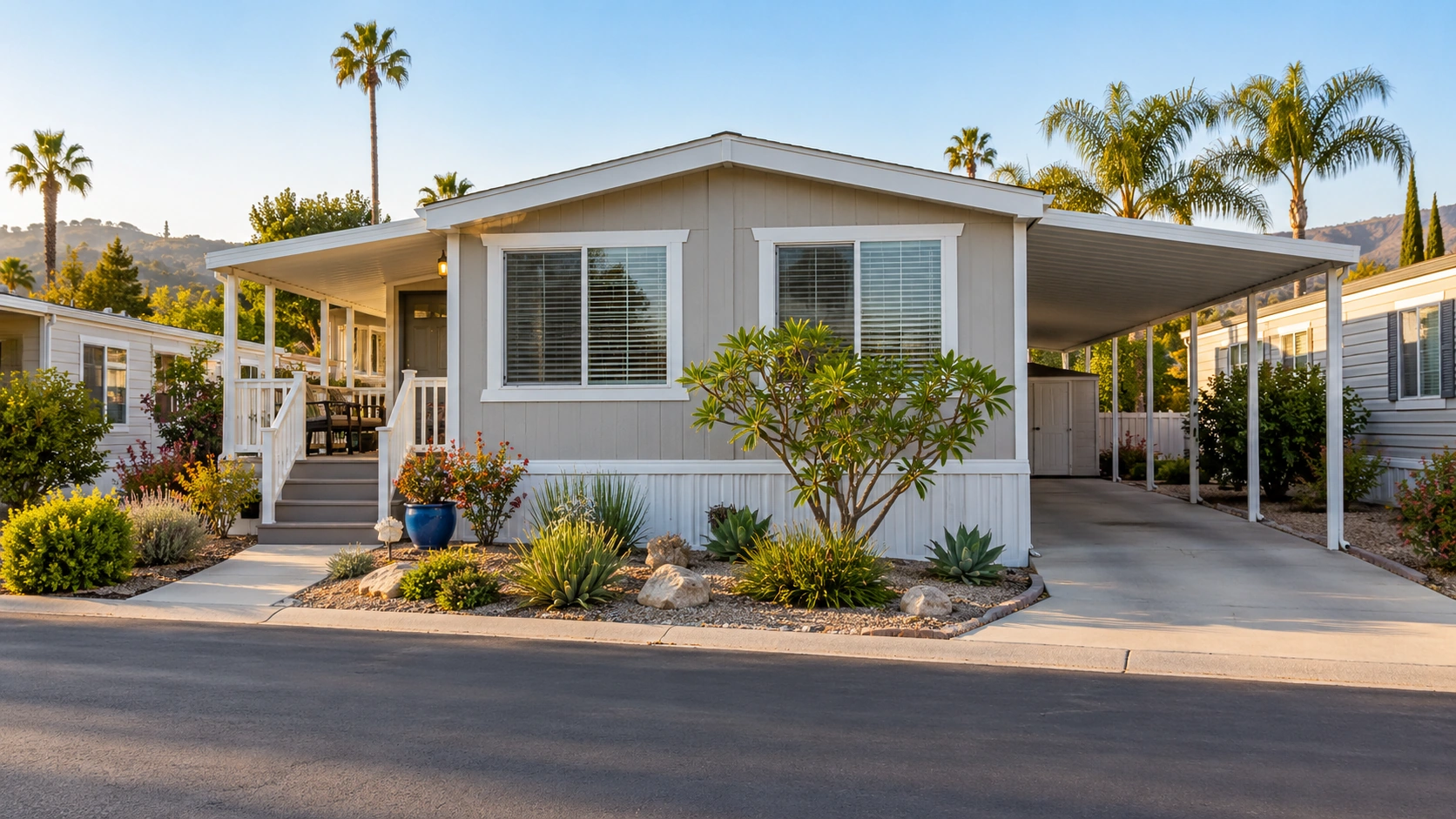
For most California manufactured homes that remain in HCD’s registration system, the current title and registration are the main starting documents for a sale or transfer. They show the home’s registered ownership information and help the mobile home sales agent determine which transfer instructions apply. If those documents are missing, inconsistent, or the home may have been converted to real-property treatment, additional HCD or county records may be needed.
For an HCD-titled private sale, the required transfer documents depend on the home’s title and tax status. HCD’s current instructions generally call for the original title, the current registration card, a Multi-Purpose Transfer Form, and any transaction-specific tax or fee documents. A bill of sale is not required in every transfer. If an original title or registration card is missing, HCD provides duplicate-document procedures. For help with a mobile-home transaction, visit SD Mobile Home Guide.
Start With the Current Title and Registration
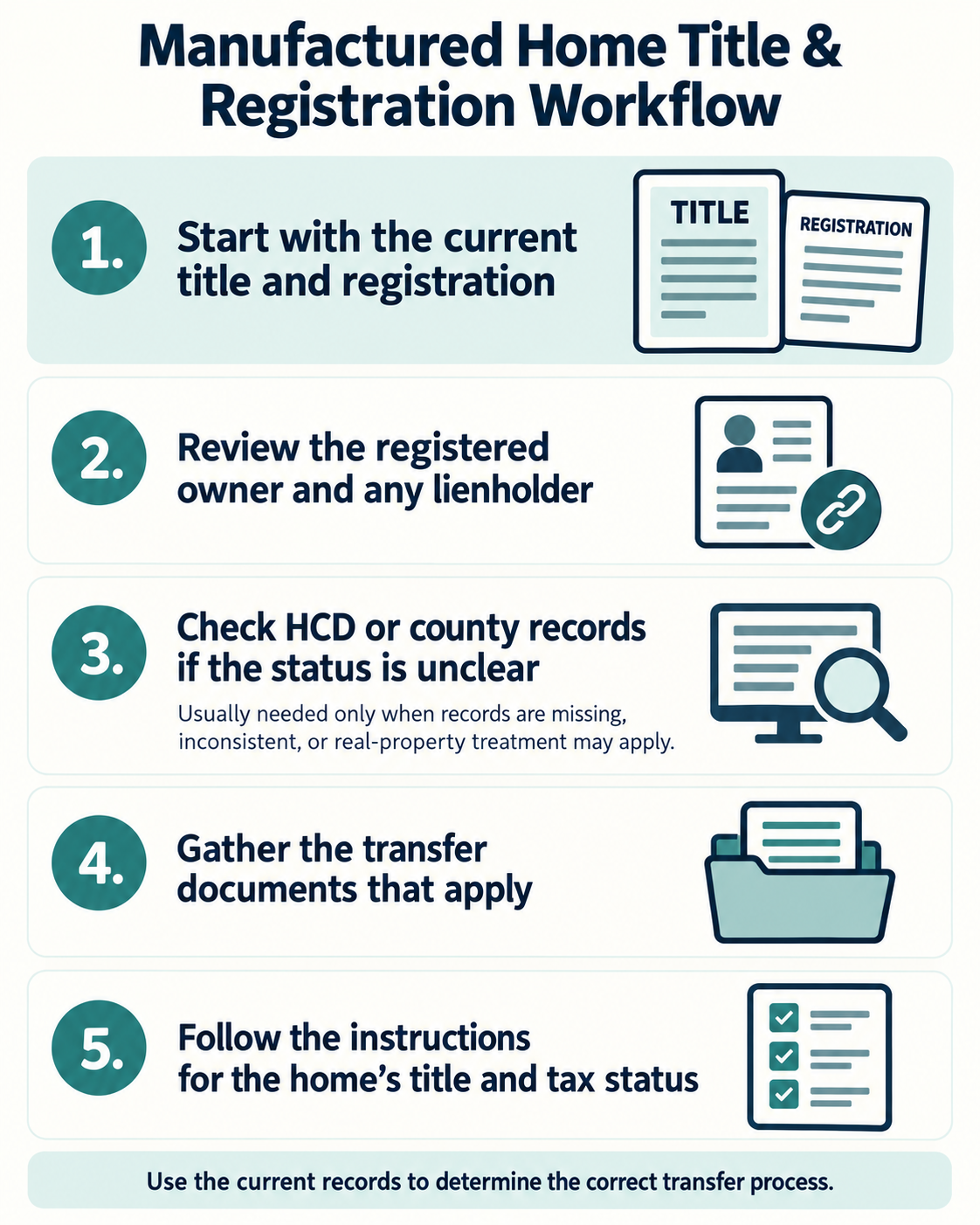
In a typical HCD-titled transaction, start with the current Certificate of Title and Registration Card. Together, these records provide the key ownership and registration information for the home and show whether a legal owner or lienholder is recorded.
In a transaction handled through a mobile home sales agent and escrow, the seller or agent typically keeps the original title and registration secure until they are delivered for the transfer rather than handing the originals to the buyer. The mobile home sales agent can review the records and identify any issue that needs to be resolved before closing.
If the title or registration is missing, appears outdated, or does not match the home or seller information, use HCD’s current procedures to verify or correct the record before completing the transfer.
Check Whether a Different Property Process Applies
A manufactured home that remains titled and registered through HCD generally follows HCD’s registration-and-titling transfer process. A home installed on a qualifying permanent foundation can instead become an improvement to real property when the required foundation documentation is recorded and HCD registration is canceled.
When current HCD title and registration documents are available and consistent with the home, they are the normal starting point for determining the transfer process. If the home’s status is unclear, the HCD record is missing, or there is reason to believe the registration was canceled, check HCD and the applicable county records before deciding which process applies.
Gather the Documents for a Title Transfer
Once the title and registration have been reviewed, follow the HCD instructions that match the home’s current title and tax status.
For many private-party transfers of an HCD-titled home, the transaction uses the original HCD Certificate of Title, the most recent Registration Card, and the Multi-Purpose Transfer Form. The seller signs the title where required, while the buyer completes the new-owner information and the buyer portions of the required transfer forms.
Other documents depend on the home. For example, a home subject to local property taxation may require a county Tax Clearance Certificate, while a home on yearly HCD registration can require different tax or value documentation. Some older homes still have a DMV Ownership Certificate and follow a separate HCD instruction set.
A bill of sale may be useful or required in certain circumstances, but it is not a universal requirement for every transfer. Use HCD’s current instructions for the specific home rather than assuming every sale uses the same packet.
If the home is treated as real property rather than remaining in HCD’s registration system, review the applicable recorded real-property documents and use the transfer process that applies to the land and home.
File the Transfer and Update Registration
Submit the forms, original documents, and fees required by HCD for the home’s specific transfer type, or have the transaction professional handling the transfer do so.
HCD publishes separate private-sale instructions based on factors such as whether the home is on local property taxation, yearly registration, or an older DMV ownership certificate.
Keep copies of documents that are appropriate to retain, but keep the original title and registration secure while the transaction is pending.
Respond to any HCD request for additional information or documents needed to complete the transfer.
After the transfer is processed, review the updated title and registration information for accuracy and address any errors with HCD.
Handle Liens, Taxes, and Missing Documents
The current title and registration usually provide the first indication of whether a legal owner or lienholder is recorded and which registration status applies. These are not separate seller records that must always be located independently.
If a legal owner or lienholder is shown on the title, use the applicable HCD release or lien forms and obtain any signatures or documents required to remove or change that interest.
Tax and fee requirements depend on the home’s status. For example, a private sale of an HCD-titled home on local property taxation generally requires a county Tax Clearance Certificate, while a home on yearly registration can have different use-tax, renewal, or registration requirements.
If the original Certificate of Title or Registration Card is missing, use HCD’s current duplicate-document process. If a legal owner is shown on the title, additional requirements may apply to a duplicate-title request.
Because the required forms can vary by title, tax status, and transaction type, use HCD’s current transfer instructions rather than relying on one document list for every manufactured home.
Conclusion
For most HCD-titled manufactured-home transactions, start with the current title and registration. Review what those records show about ownership, any recorded legal owner or lienholder, and the home’s registration status, then use the transfer instructions that match those records. Additional HCD or county research is mainly needed when the documents are missing, inconsistent, or the home may be treated as real property.
If you are buying, confirm that the seller or mobile home sales agent has the title and registration ready for transfer, and let the transaction or escrow process handle the originals as appropriate. If you are also planning your purchase budget, use the SD Mobile Home Guide affordability calculator as an educational budgeting tool to estimate what may fit your monthly budget.