Financing, Costs & Ownership
How Manufactured Home Financing Differs From Traditional Home Financing in California
How Manufactured Home Financing Differs From Traditional Home Financing in California In California, manufactured-home financing can differ from mortgage financing for a site-built house because the home may be financed separately from the land or as part of real property with owned land. For an existing home in a mobile-home park, the buyer is typically […]
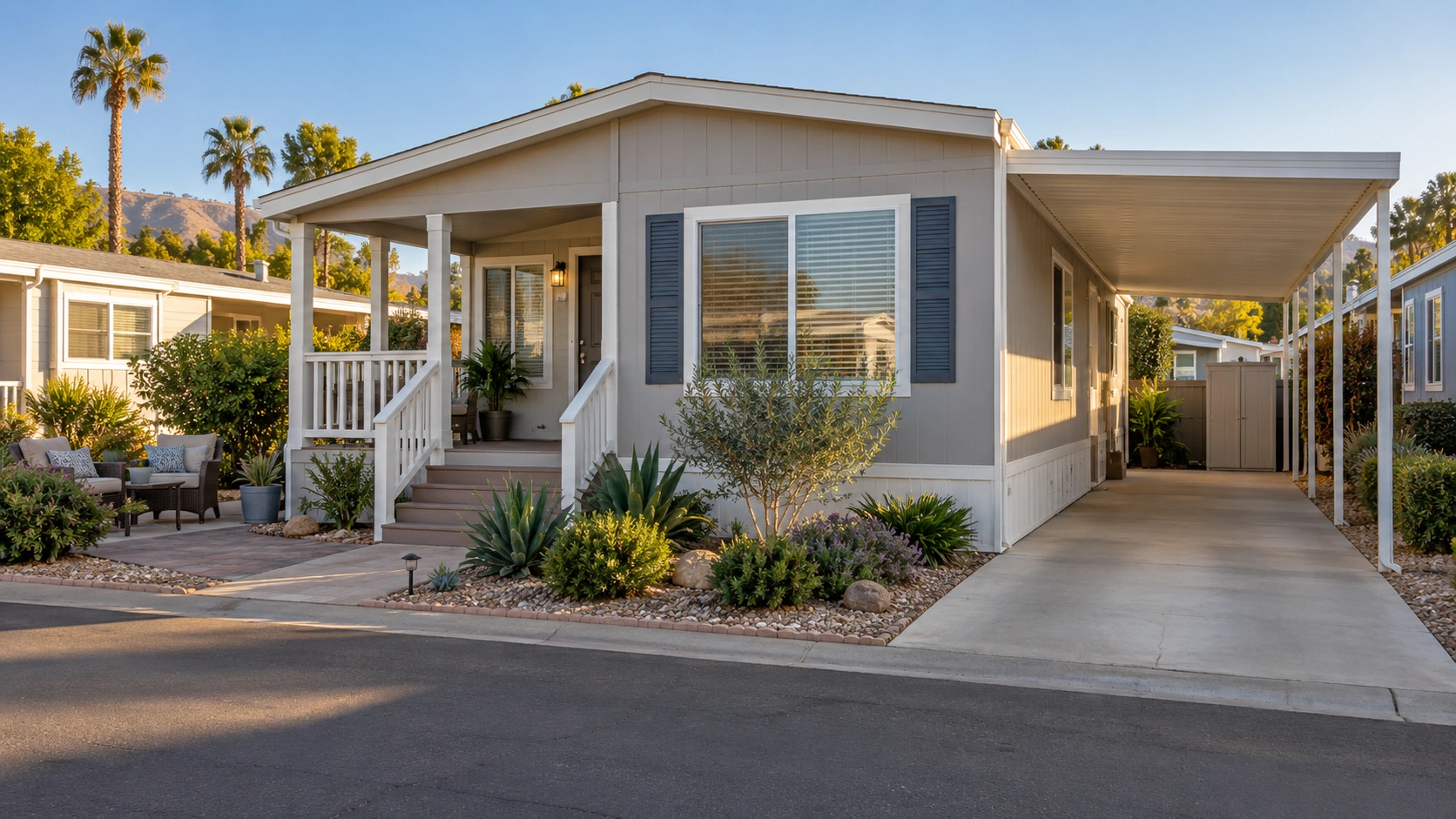
In California, manufactured-home financing can differ from mortgage financing for a site-built house because the home may be financed separately from the land or as part of real property with owned land. For an existing home in a mobile-home park, the buyer is typically financing a home that is already located in the community while separately budgeting for space rent and other recurring park costs. For a manufactured home sold with owned land, mortgage financing may be available when the property meets the lender’s and loan program’s requirements.
The available options depend on the home, land ownership or site arrangement, title and property status, age and condition, applicable HUD construction standards, the loan program, the lender, and the borrower’s finances. Some government-backed programs also allow financing for manufactured homes on leased lots. SD Mobile Home Guide is not a lender or underwriter. Before comparing loan payments, you can use the SD Mobile Home Guide affordability calculator as an educational budgeting tool to estimate how the home payment, space rent when applicable, and other housing costs may fit your budget.
How Are Manufactured Home Loans Different?
A traditional real-estate mortgage is secured by real property. Manufactured-home financing can work differently because some transactions finance the home itself without the land, while others finance the home and owned land together.
A loan secured primarily by the manufactured home rather than the land is often described as personal-property or chattel financing. A mortgage product for a manufactured home generally has separate property, foundation, title, appraisal, and program requirements.
Requirements are not the same across every lender or loan program. Ask potential lenders whether they finance the specific type of manufactured home and land arrangement you are considering and which property requirements apply.
How Does Land Ownership Shape Your Loan Options?
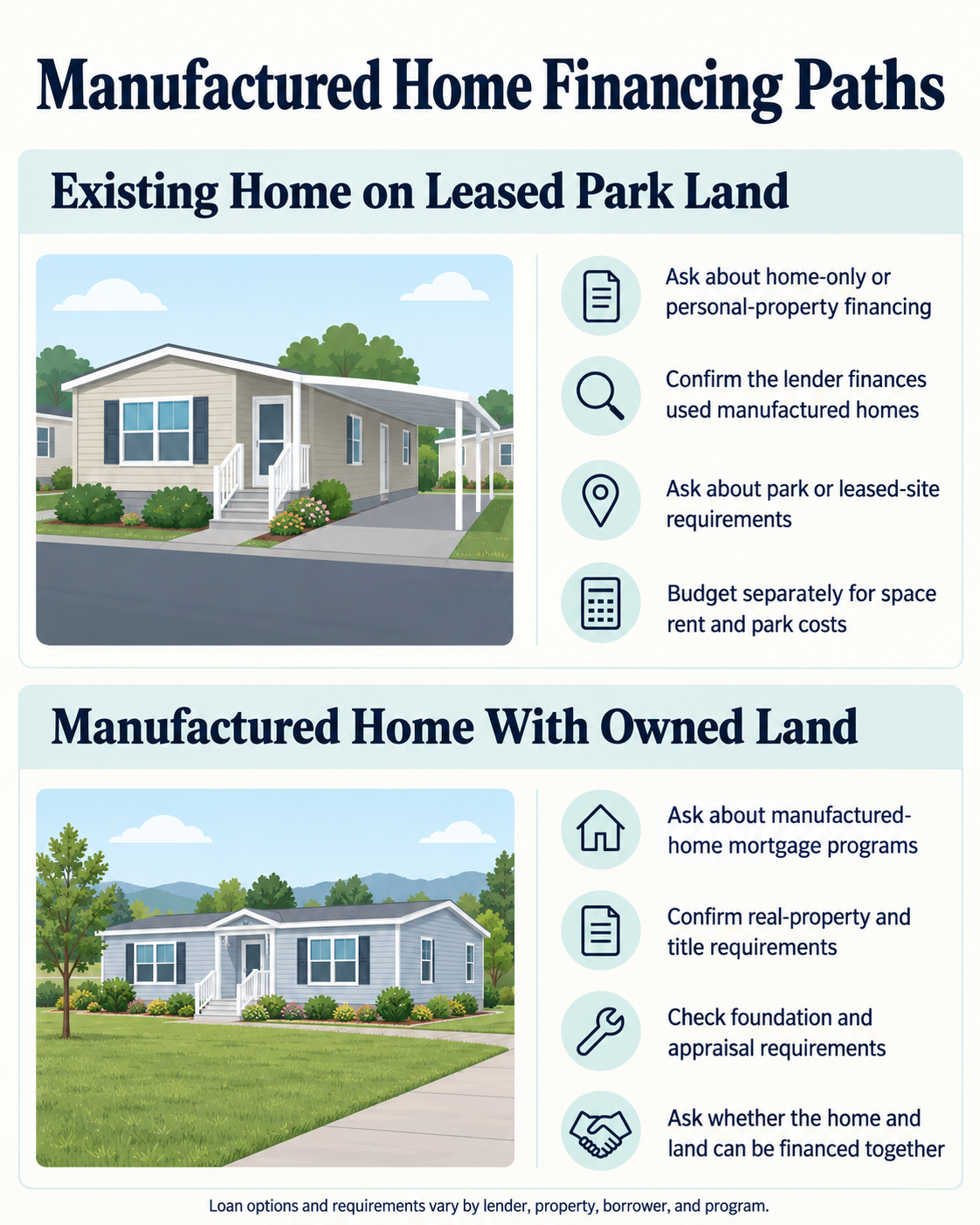
Land ownership is one of the main differences between manufactured-home financing and financing for a conventional site-built home.
If you are buying an existing home in a San Diego mobile-home park, the home is already located on a rented space. Ask lenders whether they finance used manufactured homes on leased land and what park, lease, or site requirements they have. Separately, after you have a fully accepted offer, get the current space rent, written park rules, utility information, and residency-approval requirements directly from park management.
If you are buying a manufactured home with owned land, ask lenders about mortgage programs that finance the home and land together and what real-property, foundation, appraisal, and title requirements apply.
Land ownership is not the only path to manufactured-home financing. For example, FHA’s Title I Manufactured Home Loan Program can finance a manufactured-home unit on a leased lot when the program’s requirements are met. The availability of any particular program still depends on the lender, property, borrower, and current program rules.
When Can Mortgage Financing Be an Option?
Mortgage financing can be an option when the manufactured home and property meet the requirements of the specific mortgage program and lender.
For example, Fannie Mae’s manufactured-housing guidelines require the home to be attached to a permanent foundation system and the home and land to be legally classified as real property. Other mortgage and government-backed programs have their own requirements.
Manufactured homes built under the federal HUD Code carry certification labels and have a data plate with identifying and construction information. The HUD Code took effect for manufactured homes produced on or after June 15, 1976. A lender or loan program may require evidence that the home meets applicable manufactured-housing standards, but the exact documentation varies by program.
Ask the lender to identify the property, foundation, appraisal, occupancy, title, and borrower requirements for the specific program before relying on that financing option.
What If the Manufactured Home Is Personal Property?
If the manufactured home remains titled as personal property, financing may involve a home-only or personal-property loan rather than a real-estate mortgage. This is a common financing category to ask about when the home is in a mobile-home park and the buyer rents the space.
The home serves as collateral for this type of financing rather than the underlying land. Interest rates, terms, down-payment requirements, fees, and underwriting standards vary by lender and product, so compare the actual loan disclosures rather than assuming the terms will match a mortgage.
For a California HCD-titled home, confirm that the seller or mobile home sales agent has the current title and registration ready for transfer. The originals should remain secure and move through the transaction or escrow process as appropriate rather than being casually handed to the buyer.
Which Financing Options Should You Ask About?
The most useful starting point is to match the financing question to the property you are actually buying.
For an existing home in a mobile-home park, ask lenders specifically about financing for a used manufactured home on leased land and what they require for the home, park, and site arrangement.
For a manufactured home sold with owned land, ask about mortgage products for manufactured housing and the program’s real-property, foundation, appraisal, and title requirements.
If you are buying a manufactured home and private land together, ask whether the lender can finance both in one transaction and what site or installation documentation applies. Those installation and site-work questions generally relate to a private-land placement project, not the normal purchase of an existing home already located in a San Diego mobile-home park.
SD Mobile Home Guide is not a lender or underwriter. A lender must determine what financing, if any, is available for the specific borrower and property.
What Do Manufactured Home Loans Cost in California?
The cost of manufactured-home financing depends on the loan type, interest rate, annual percentage rate, term, down payment, and applicable fees.
Depending on the product and transaction, costs can include origination, appraisal, title, recording, insurance, or other charges. Not every fee applies to every loan.
Compare the annual percentage rate, monthly payment, cash needed at closing, loan term, fees, and total repayment information shown by each lender. A lower monthly payment does not necessarily mean a lower total borrowing cost.
If the home is in a park, include the current space rent, separately billed utilities, insurance, maintenance, and other recurring park or housing costs when deciding whether the overall purchase fits your budget.
What Should You Prepare Before Applying for a Loan?
Ask each lender which documents it requires before you apply, because the list can vary by loan product and transaction.
A lender may request information about income, assets, debts, credit, and the purchase agreement. For the home, it may also request identifying information, age, title or registration information, appraisal or inspection information, insurance details, and evidence related to HUD construction standards when applicable.
If you are buying an existing park home, confirm that the seller or mobile home sales agent has the title and registration ready for transfer. After a fully accepted offer, get the current space rent, rules, utility information, and residency-approval requirements from the park manager, and ask the lender which park or rental documents it needs.
If you are buying a manufactured home for private land rather than an existing park home, the lender may also ask for land, foundation, installation, site, or utility documentation that applies to that project.
Conclusion
Manufactured-home financing in California depends on more than the buyer’s finances. The home’s title and property status, whether the land is owned or leased, the type and age of the home, and the lender or loan program can all affect which financing paths are available.
For a San Diego park purchase, focus on lenders that finance existing manufactured homes on leased spaces, confirm the seller or mobile home sales agent has the title and registration ready for transfer, and include the current space rent and other recurring costs in your budget. For a home with owned land, ask about manufactured-home mortgage programs and their property requirements. Compare the actual terms and disclosures from lenders before choosing a financing option.